Free ATS Resume Score: What It Measures and How to Raise It
You ran your resume through a checker and got 62 out of 100. Here is what that number means, what it does not, and what to fix first.
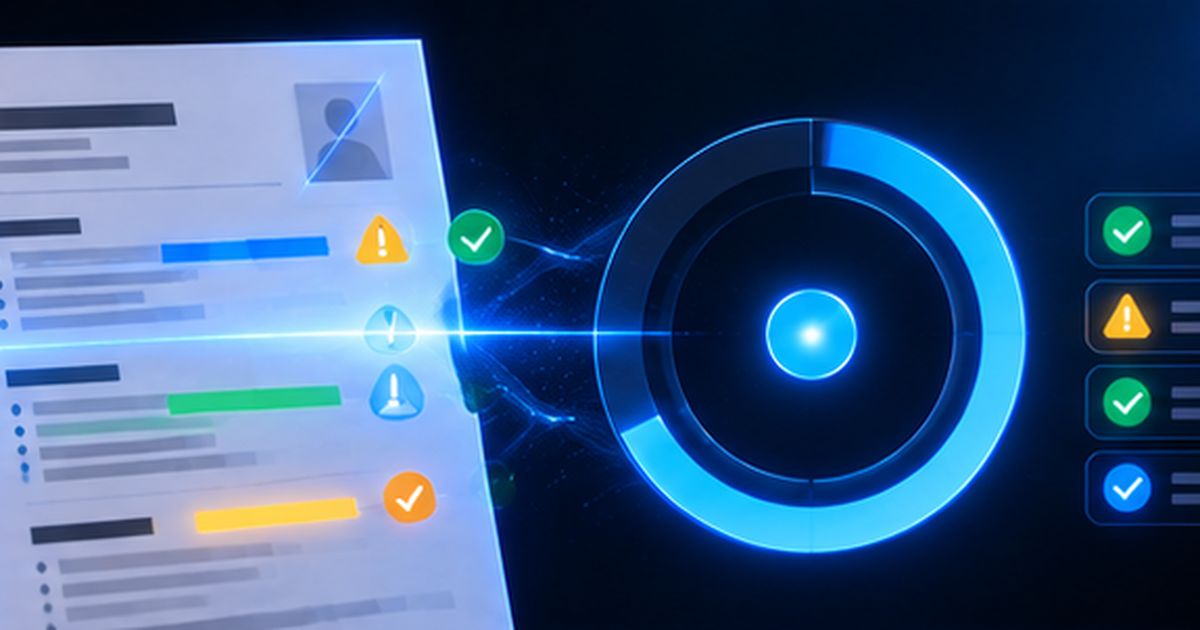
You upload your resume to a checker and it comes back with 62 out of 100. Is that bad? What is it even measuring? And what do you change first?
This guide answers those questions without the usual scare tactics. A resume score is useful, but only when you know what sits behind the number.
What an ATS actually is
An applicant tracking system, or ATS, is the software employers use to collect applications, store them, and let recruiters search and sort them. When you apply, the system reads your file and breaks it into fields: name, contact details, job titles, dates, skills. A recruiter then searches or filters those fields, or opens your resume directly.
Two things are worth knowing. First, at most companies a person still decides who gets an interview. The ATS works more like a filing cabinet with a search bar than a robot judge. Second, if the parser misreads your file, you become harder to find, and that is the real risk.
Be wary of any exact claim about what percentage of resumes are "rejected by robots". Figures like that get repeated everywhere and rarely trace back to a solid source.
What a resume score measures
There is no single official ATS score. Every employer's system works differently, and none of them show applicants a number. A checker such as the QuantumCV resume analyser estimates how well your resume would hold up in that process, based on the things that commonly matter:
- Readability for parsers: real selectable text, standard section headings, a simple layout, and no content trapped in images
- Content strength: quantified achievements, action verbs, and bullets that describe what you did rather than what your duties were
- Keywords: whether the skills and terms in the job posting appear in your resume
- Completeness and format: contact details, consistent dates, and a sensible length
Treat the score as a to-do list rather than a grade. The breakdown of what is strong and what needs work is worth more than the number itself.
What a score cannot tell you
- Whether a particular company's system will rank you highly
- Whether your background fits the role the way a hiring manager would judge it
- How your resume reads to a person who has forty others to get through
- Whether what you wrote is true
A generic resume can score 90 and still get ignored. A resume that scores 70 can still land an interview because the projects are exactly what the team needs.
How to raise your score, in the right order
- Fix parsing problems first. If the text cannot be read, nothing else matters. Use a single column, standard headings such as Education, Projects and Skills, and export a PDF where you can select the text.
- Strengthen the bullets. Replace duties with outcomes, and add numbers where they are true: users, records, percentage improvements, team size, time saved.
- Tailor keywords to one job at a time. Pull the repeated skills from the posting and use the same wording wherever you honestly have the skill.
- Clean up the details. Use one date format, remove stray symbols, and check the spelling of tool names.
- Re-run and compare. Change one group of things at a time so you can see what moved the score.
Common reasons freshers score low
- Vague bullets such as "worked on a website"
- Skills listed with no evidence of them in any project
- No metrics or scale anywhere on the page
- Creative templates built with columns, icons and text boxes
- Missing keywords because the resume was written once and sent everywhere
- Unusual headings like "My Journey" instead of "Experience" or "Projects"
A simple routine
Run your resume through the analyser, fix the top three issues it flags, then run it again. Do that once with your general draft, and once more after you tailor it to a specific posting. Two or three rounds is plenty. Beyond that you are polishing for a number instead of for a reader.
In QuantumCV, the ATS score is free for every resume you build. If you want help rewriting weak lines, the chat editor and bullet enhancer use one credit per request. Or rewrite them yourself using our guide to resume bullet points for freshers.
Frequently asked questions
Is a higher ATS score always better?
No. Once your resume parses cleanly and matches the job, extra points change very little. Aim for a clear, honest resume rather than a perfect 100.
Do all companies use an ATS?
Most mid-sized and large employers do, and many small companies do not. A clear resume with real text works well either way.
Will a PDF or a Word file score better?
A PDF with real selectable text is read correctly by most systems. Use a Word file only when the application asks for one.
Put this into practice
Build a first draft from your own notes, then check it with the free ATS score before you apply.